

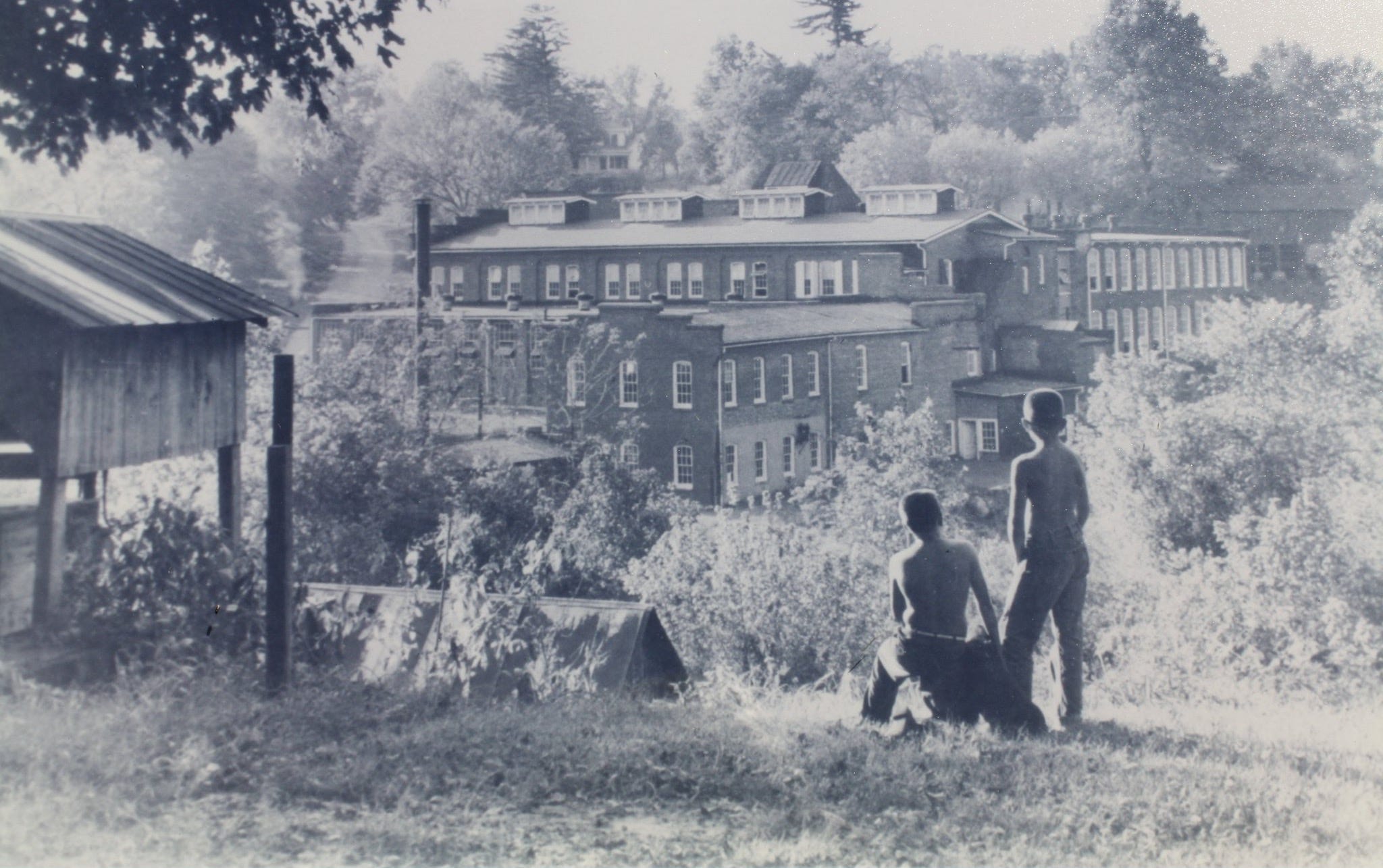
For as long as mankind has existed, we have crafted and told stories.
Some stories are born out of truth, others are invented for a narrative purpose.
The stories that persist become folklore and legend, outliving their authors, sometimes by centuries or even millennia.
These stories are rarely told the same way twice. Most are disseminated through oral tradition, each storyteller adding or subtracting details as he sees fit.
In this edition of the Chronicle, in the spirit of Halloween, we will put a spotlight on four of the more spooky stories to have come from our local area.
The tales that you are about to read are apocryphal in nature. No evidence has been found to prove or disprove their veracity. Nonetheless, they persist as urban legends, entries in the great American storytelling tradition.
The Lake Norman Monster
The Lake Norman Monster (also known as the Lake Norman Mud Monster or simply “Normie”) is the area’s most widely known local legend. Hundreds of people claim to have seen this creature in the depths of Lake Norman.
Descriptions of Normie vary, but the general consensus is that the creature resembles a giant serpent or a large alligator. Some say the monster is made entirely of mud or clay.
A common theory is that the creature was created by repeated radioactive spills from Duke Energy’s power plants, causing a mutation in local wildlife.
Many believe that the sightings are too numerous to be entirely fictitious, but claim that Normie is nothing more than a 200-pound fish or an alligator that was illegally dumped in the lake.
Believers report sightings of the creature to LakeNormanMonster.com, a locally-run website that also sells Normy-themed merchandise.
In July, a Denver resident reported the following sighting: “My wife’s aunt saw something that terrified her. She lived on Lake Norman and saw something huge swim under her pier. It wasn’t like the regular Normie sightings. She thought it was a man in scuba gear at first, but then she realized it was a creature. She said it had wings, almost like a cape. Anyway, it really scared her, and she often talked about it when we were on her pier. … She was a very honest person. I believe she saw something.”

In most cases, Normie is said to be harmless. The creature is not commonly known to attack boats or people.
While a cynic may dismiss Normie as nothing more than a modern advertising ploy, the existence of such a creature is not without precedent.
Native Americans from the Catawba and Cherokee tribes described enormous creatures that were said to inhabit the Catawba River prior to the arrival of European colonists.
One such creature, the Uktena, was described as a nearly unkillable beast that made its home in mountain passes and in the depths of the rivers of western North Carolina, including the Catawba.
A description from the Native History Association reads, “[Utenka was] a great snake, as large around as a tree trunk, with horns on his head, and a bright, blazing crest like a diamond upon its forehead, and scales glittering like sparks of fire. It has rings or spots of color along its whole length.”
Is Normie a shameless cash grab, a radioactive monster created by pollution, or a confirmation of an ancient Native American legend? We will leave that up to you.
The Long Island Man
Between 1959 and 1964, Duke Energy, with cooperation from state and local authorities, built a dam to flood a section of the Catawba River valley. The result was the creation of Lake Norman.
Today, the Cowans Ford hydroelectric dam still provides electricity to over 200,000 homes. The lake that it created and maintains has become a hub for recreation and a boon for Duke Energy’s other projects.
Unfortunately, the area that was flooded was home to hundreds of individuals in the towns of East Monbo and Long Island. Those people were forced out of their homes and jobs as the overflowing banks of the Catawba River began to encroach.
Homes, businesses, and cemeteries were abandoned and left to be submerged under the water, where they remain to this day.
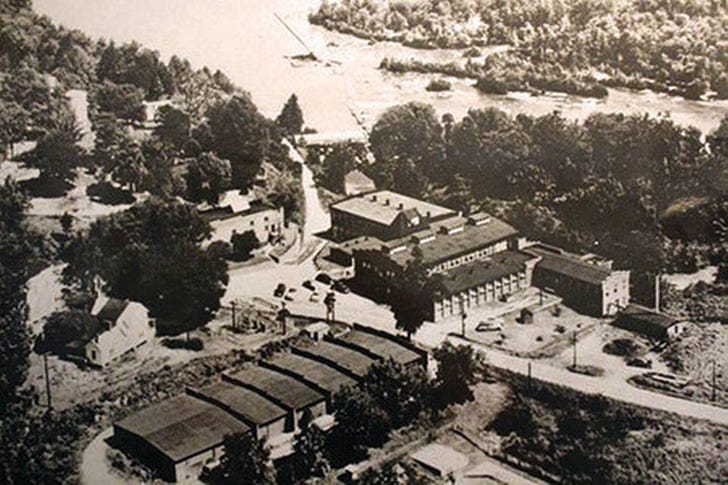
The Long Island Man is said to have originated from this tragedy.
In one version of the story, the man was Edgar Reinhardt. Edgar had lived a tumultuous and restless life and was finally laid to rest in a Long Island cemetery in 1956.
Efforts were made to relocate some of the cemeteries, but ultimately, many were left to eternally lie in the depths of Lake Norman. Edgar, being a black man with no surviving family, was one of them.
It is said that Edgar - it is not clear whether in spirit or in flesh - rose after his grave was disturbed to terrorize the people of Lake Norman.
In another version of the story, an old man (sometimes referred to as Old Man Schronce) refused to move out of his Long Island home as Lake Norman slowly flooded. Eventually, the water rose high enough to drown him in his home.
His body was never found, but his spirit is said to remain.
Legends say that the Long Island Man now roams the shore of Lake Norman at night, searching for vulnerable victims.
His motivation varies depending on who is telling the story. Some say he kills in response to pollution caused by Duke Energy, local governments, and private citizens. Others say he kills in an attempt to prevent any further development along the lake shore. Others yet say he kills at random, taking brutal revenge on any still living.
But the stories all agree on one thing: he kills. When he chooses his victims, he pulls them down below the surface of the viscous waters of Lake Norman until their lungs fill with the very same waters that once took his peace.
The Tell-Tale Heart of Gold
Many people do not know that the first gold rush in the United States occurred in western North Carolina.
Even fewer know that gold was plentiful in the area surrounding Anderson Mountain, and could be found readily in Chronicle and Denver (see our article on the Carolina Gold Rush).
In the 1840s, a Denver man was visiting his friend’s farm in Chronicle, near Anderson Mountain. The name of the men vary depending on who tells the story, but we will call the visitor Killian and the farmer Wilkinson.
Killian had agreed to help Wilkinson plow his field in exchange for a small sum of money. The two set to work one day with a positive attitude.
When Killian, in the midst of his plowing, discovered a ten-pound gold nugget, the two were initially ecstatic. Things went sour quickly, however, when Wilkinson attempted to claim the entire nugget for himself. After all, he said, it was found on his property.
This, Killian said, was not fair, as he had been the one to discover the nugget.
The two argued for nearly an hour, until in a moment of heated passion, Killian took the nugget and used it to bash Wilkinson’s head in, killing him.
Killian fled the scene with the gold. Since no one else knew Killian had been at the Wilkinson farm, no one suspected him of the murder. He believed he had gotten away with it.
However, within a week, Killian had gone mad. He began to hear voices. He claimed to have seen visions of Wilkinson, condemning him for his crimes.
His madness drove him to hang himself, leaving a note with one simple instruction: “keep not the gold, for it is the root of much evil.”
Killian’s heirs did not respect his wishes. It is said a long chain of tragedy and death followed the family until the gold was finally sold.
Eventually, the nugget was sent to the Charlotte Mint, where it was forged into gold coins.

According to the legend, the curse persisted. Those who held the coins continued to see misfortune and death. Today, few coins from the Charlotte Mint exist outside of the collections of experts.
If you happen to come across such a coin, you would do well to sell it quickly. If you hang on to it too long, you may face the same fate as Killian.
The Ghost of Tower Road
For centuries, hikers have traveled to the top of Anderson Mountain for the secluded peace and panoramic views. In the modern day, one can drive to the end of Tower Road and see Lake Norman and Charlotte’s skyline in the east, and the Appalachian Mountains in the west.
Visitors to the mountain have long reported sightings of a strange apparition visible at dusk and dawn: a pale, gaunt young man in old, worn clothing.
Locals have been quick to link the ghost sightings to the story of Tom Little. Tom was a deserter during the Civil War, choosing not to join the Confederate Army on moral grounds.
He hid in the woods of Anderson Mountain for months, surviving on food and other supplies brought by local women sympathetic to his views.
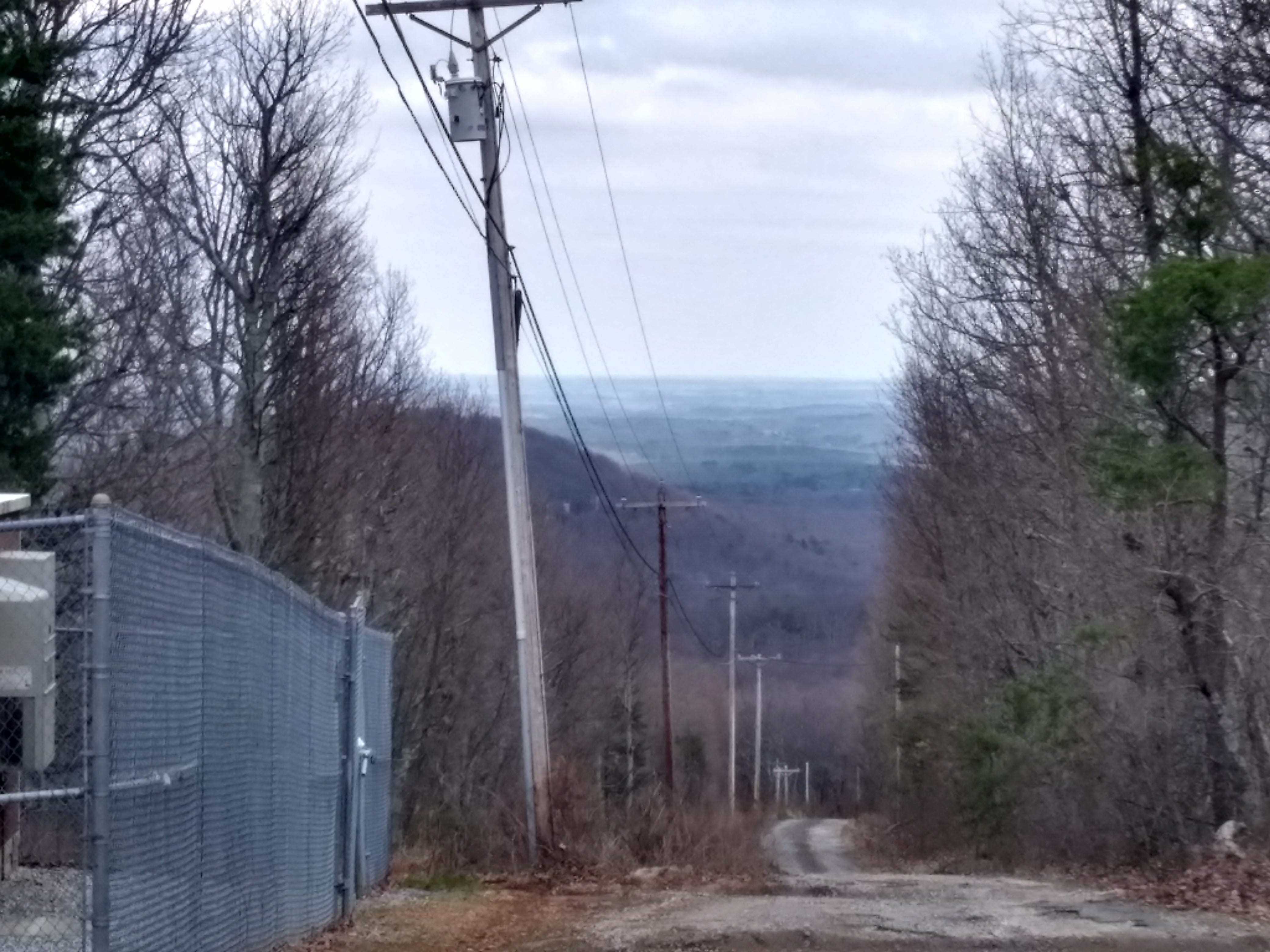
One day - no one knows why - the food deliveries stopped. Tom continued to hide atop the mountain into the winter months, until he slowly starved and froze to death. Some say his desperate pleas can be heard on Anderson Mountain on particularly breezy nights.
Today, Tom roams the mountainside, searching for a meal. If you see him atop Anderson Mountain, you have no reason to fear. He is far more focused on your sandwich than you.