

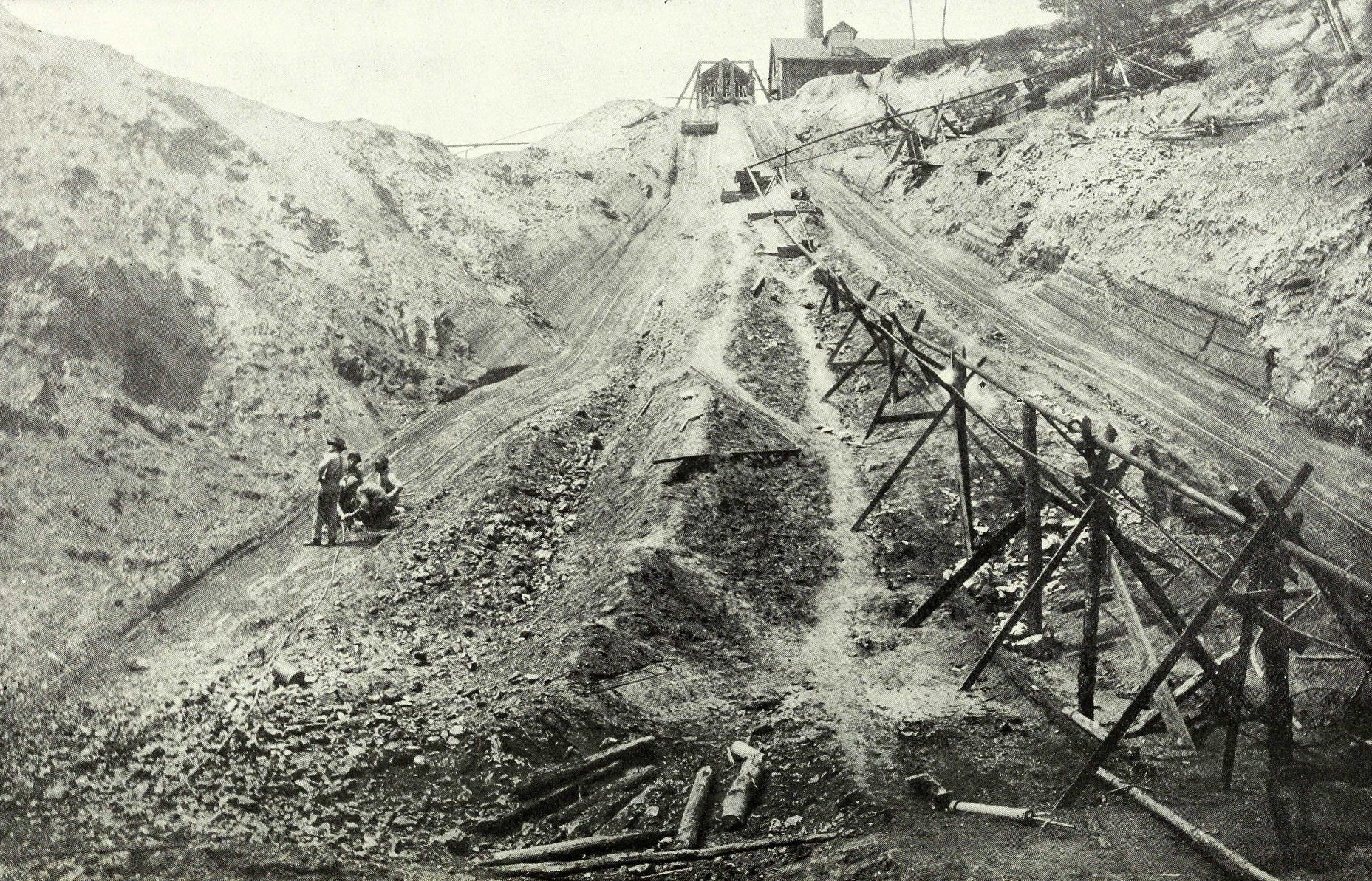
In 1799, five decades before the beginning of the California Gold Rush, gold was discovered in the foothills of western North Carolina.
A 12-year-old boy named Conrad Reed was playing in the stream that ran across his family’s property when he stumbled upon a 17-pound gold nugget.
It was the first documented discovery of gold in the United States, and it drew the attention of investors, prospectors, and businessmen from across our young country.
So much gold was mined that locals and politicians began to call for local infrastructure to process it.
For decades, the gold was sent on the perilous journey from western NC to Philadelphia, where the federal government would mint gold coins.
In the 1830s, businessman Christoph Bechtler, seizing the opportunity, opened his own mint in western NC, an act that was legal at the time.
This and other actions spurred the creation of the now-defunct Charlotte Mint in 1837, the first federal branch mint in the United States. The Charlotte Mint ceased production during the Civil War, when the Confederacy seized the facility. It is now The Mint Museum.
The gold rush spilled over into neighboring Georgia in the 1820s, when gold was discovered in the northern parts of the state.
The phrase “there’s gold in them thar hills” originates from a novel written by Mark Twain. The author claimed that he borrowed and modified the phrase from a Georgian prospector, who spoke of gold found in the southern reaches of the Blue Ridge Mountains.
Some estimates say that there were over 600 operational gold mines in North Carolina at the height of the gold rush.
Several of those mines were in Catawba County. One such mine is the Shuford Mine, located on the furthest petering hills of the Anderson Mountain (also known as Little Mountain) chain in Sherrills Ford.
Early records of the mine are scarce. What is known is that it was founded in 1840 by John C. Shuford, after one of his slaves discovered gold in the area. Mining operations were extensive, and the mine continued operations after the Civil War.
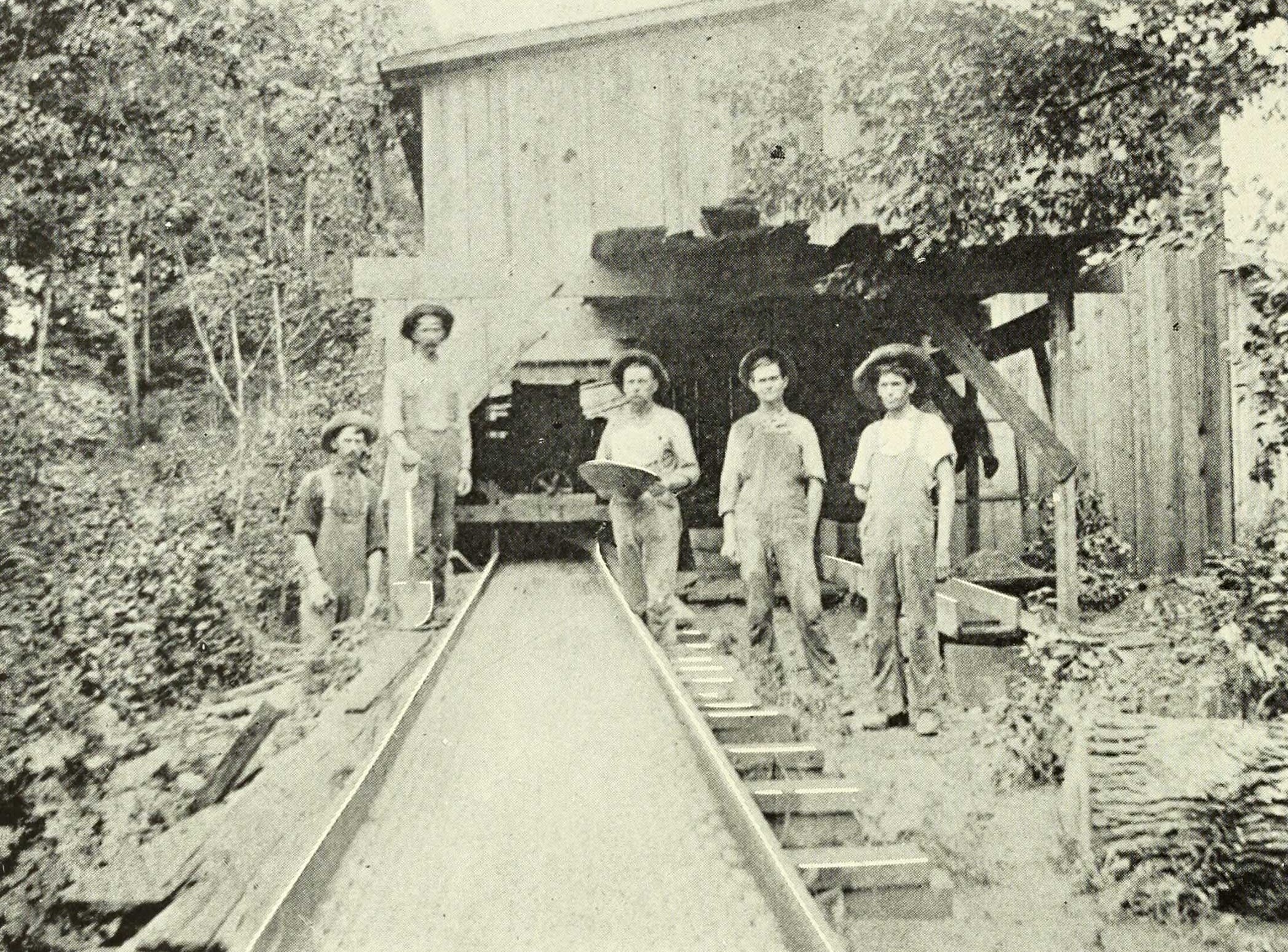
A Newton paper wrote of the Shuford Mine in 1883, “The quantity of the precious metal extracted from the mine, in antebellum days, and since the war, would amount to several thousand dollars.”
By 1883, the mine was owned by “wealthy capitalists” from New York. The article describes a dam, 20 feet high by 150 feet long, that was used to flood the land.
The pond created by the dam would intentionally erode the area, allowing easier access to the gold.
The water was also used to run a “five horse power boiler and fifty horse engine” that would assist in the
mining. This mechanical pneumatic contraption enabled the miners to hose highly pressurized water at gold deposits, removing the loose sediment while preserving the gold.
A mineshaft was drilled eight hundred feet into the earth, and the water was pressurized and pumped thousands of feet from the boiler engine, a feat that remains impressive even with our modern technology.
Today, Shuford Mine is little more than a water-filled pit surrounded by trees, invisible from the neighboring street. It sits across the road from the Gold Mine Store and Grill, a local gas station that borrows the mine’s name and legacy.
By the mid 1800s, the Carolina Gold Rush had ended, but North Carolina remained an important gold-producing area.
When gold was discovered in California in 1848, many of the prospectors in North Carolina and Georgia packed up their bags and headed west for greener pastures. The rest of the world followed them.
The gold, however, did not disappear with the miners.
The Newton Enterprise reported in 1884 that a mine called the California Gold Mine was running full blast “near the little mountain.”
In 1890, the Enterprise reported that a Mr. Phillip Drum, who owned a farm “near Little Mountain,” found a “28 pennyweight” piece of gold lying in the middle of his field.
The article concluded, “This is gold region, and there is no doubt much gold on Mr. Drum’s and other lands in that section.”
A little over a year later, the same man found a 15-pound piece of gold on his property. Such a find could today be worth close to a million dollars.
David Calvin “King” Wilkinson, a well-respected statesman in Catawba and Lincoln counties in the late 1800s and early 1900s, wrote often of the affairs of Chronicle. In his writings, he spoke frequently of gold.
In one such article in 1908 he wrote, “just across the Little Mountain … is one of the best paying gold mines in the state. So plentiful is the gold of this section that in several instances the children, while hoeing in the fields, have picked up nuggets of gold, worth anywhere from $16 to $26.”
Well into the 1900s, talk was made of starting new mines on or around Anderson Mountain.
Even as public consciousness of gold in the area disappeared, mining of other minerals continued.
There were significant iron mining operations in the area for several decades. Smaller amounts of quartz and silver were extracted from mines on and around the mountain.
Despite this, the Little Mountain area today is primarily known for the quarry owned and operated by Martin Marietta, an international mining company. The quarry produces gravel, sand, and stone, but not gold or precious minerals.
Gold is still mined on a smaller scale in some parts of western North Carolina. Along the Catawba River, a tradition of panning for gold continues.
In many of the Catawba’s smaller streams and tributaries, gold remains untouched on the surface of the riverbeds.
Time and time again, residents of the area surrounding the Little Mountain have found gold in their yards, fields, and streams without so much as searching.
Today, residents of Catawba County still claim they find nuggets of gold right outside their homes, much in the fashion of Conrad Reed some two centuries ago.
It is easy to dismiss these claims as fictitious. Even in the age of active gold mines and giant golden rocks surfacing in the front yards of your average farmers, locals would often dismiss the possibility of finding a meaningful amount of gold.
But the gold is here. It is difficult to believe, but if you live in Chronicle or elsewhere near the Little Mountain, your house might just be sitting on a literal gold mine.
Photo Gallery


I love the Chronicle Chronicle! Another great story about the history of our area.