

Is Chronicle a town? By some definitions, the answer is yes.
The primary definition of the word “town” in the Merriam-Webster dictionary is simply “a compactly settled area usually larger than a village but smaller than a city.”
By that definition, some (this newspaper included) would argue that Chronicle qualifies. Most modern individuals, however, favor a more legalistic interpretation.
In 2026, to be legally recognized as a town in the state of North Carolina, certain requirements must be met. Our little community does not meet most of them.
Chronicle ceased to exist in any legal capacity with the closure of the Chronicle post office in 1904.
For at least 53 years before that, it was considered to be a town by the US Postal Service, and thereby the federal government.
More importantly, Chronicle was considered to exist as a town or village by the people who lived in it.
David Calvin “King” Wilkinson, a well-respected local statesman during the turn of the 20th century, was one such individual.
He wrote often for local newspapers such as the Newton Enterprise. His articles usually included “Chronicle” in the dateline.
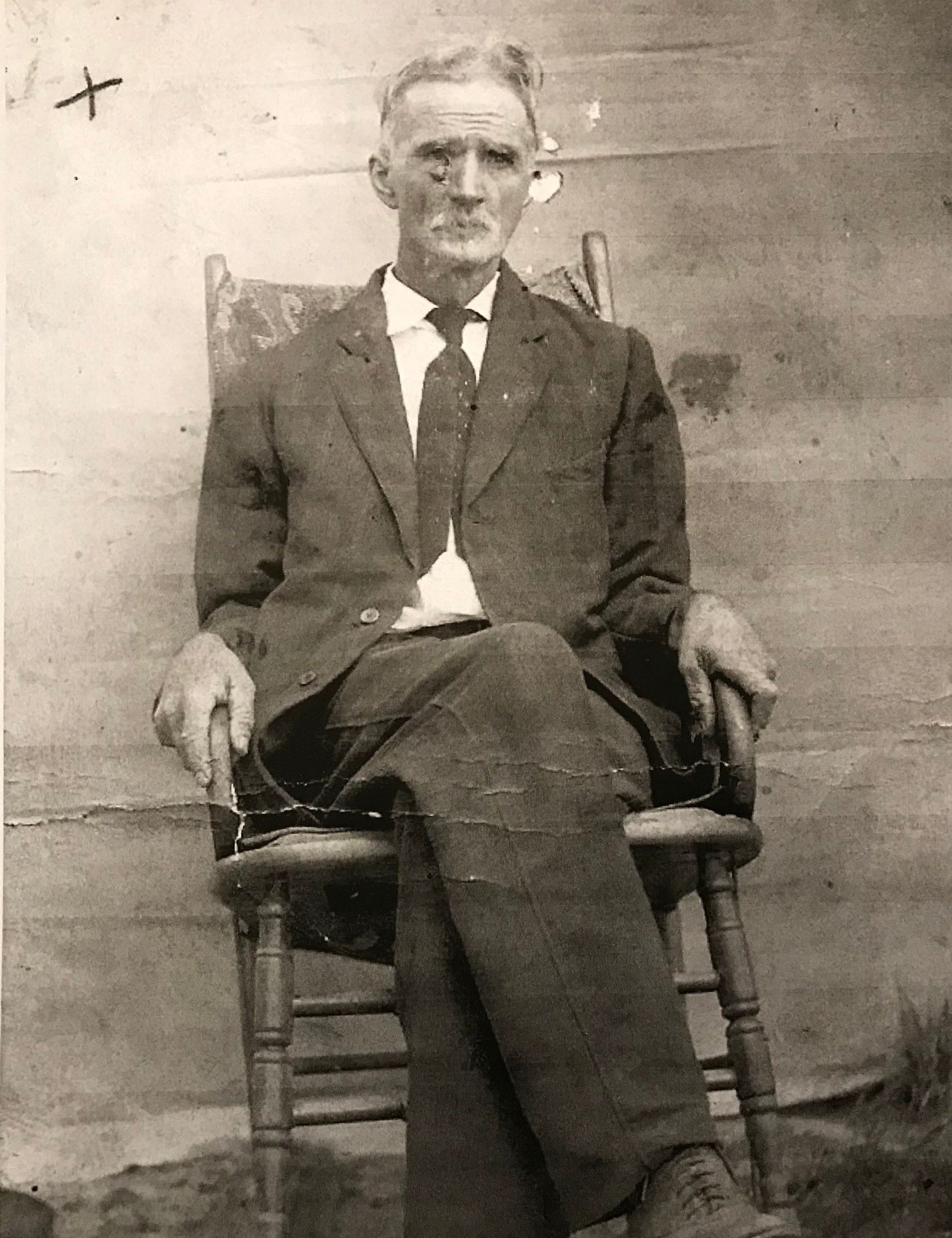
In several of those articles, Wilkinson not only affirmed the existence of our little town, but made the claim that it had a mayor.
“Crops are now looking promising in this section and the farmers are hopeful,” wrote Wilkinson in a Newton Enterprise article dated August 21st, 1891. “Mr. John Goodson, Mayor of Chronicle, undoubtedly has the boss [sic] sweet potatoes in this country. He says they are getting so large that he will undoubtedly ask the county commissioners to change the public road so as to give them room to expand.”
Wilkinson reported several other times on the business of Mayor Goodson. The author portrayed the mayor as industrious and hard-working, albeit somewhat clumsy and even bumbling.
In October 1891, Wilkinson reported that Mayor Goodson was planning to start an incubator and “sell roasted eggs by the wholesale.”
On the 18th of March 1892, Wilkinson wrote, “Every man [in Chronicle] that has an empty cupboard has a store of his own. Mayor Goodson says he’s going to put up as soon as he gets a place to put his dishes.”
More reports followed, until finally, Mayor Goodson’s term came to an end when he was forced to move away from Chronicle.
“Mayor Goodson (who would have thought it) rumor says, [married] the young and beautiful Miss Dooly Harris last Sunday,” Wilkinson wrote in February of 1895. “This will necessitate the election of a new mayor for Chronicle, as the bride only gave her hand on the condition that the Mayor should move to her estate.”
Wilkinson’s following articles documented the beginning of the complex process of electing a new mayor.
Wilkinson wrote in April of 1895, “Mayor Goodson suggests Mr. Valentine Wentz as his successor in the mayor’s office, as he is the only resident of the village who supports a mustache sufficient to discharge the duties of that responsible office.”
Unless Catawba and Lincoln Counties allowed a system of mustache-based appointments for local officials in the late 1800s, this quote calls into question the legitimacy of the Chronicle mayoralty.
The more that one reads articles penned by D.C.K. Wilkinson, the more clear it becomes that he was not always serious and accurate in his reporting.
One of his headlines, for instance, reads, “Matrimony Rampant: Is Mr. Ewing Married to His Wife or His Mother-in-Law?”
Wilkinson’s writing is littered with such sensational claims and with sarcastic humor sometimes indistinguishable from the truth.
This causes issues when a historian or journalist attempts to study Chronicle’s past, as Wilkinson is the greatest (and virtually the only) public historian in our corner of Lincoln and Catawba counties.
Wilkinson seemed to have a particular fondness for poking fun at “Mayor” Goodson, whose name was almost always mentioned along with a jab or joke at his expense.
It is easy, then, to write off the question of Chronicle’s mayor as one more joke played by the long-dead Wilkinson on us, the people of Chronicle, over a century later.
This may or may not not be the case.
In February of 1894, a man named Bill Swinny wrote in to the Newton Enterprise, the title of the article simply “Chronicle Letter.”
Swinny mentioned various local news items, including farming, the gold that existed in Anderson Mountain, and an unnamed industrious, bumbling mayor.
“The Mayor has been working on his pine grove,” Swinny wrote. “I think he has plowed some of it when [it was] too wet, for trees are turning yellow.”
Other than the articles penned by Wilkinson, Swinny’s brief mention is the only known instance of Chronicle’s mayor in the known historical record.
Nonetheless, it is clear that Wilkinson was not the only person who considered Goodson, whether jokingly or not, to be the Mayor of Chronicle.
Perhaps Swinny was playing along with the joke, or perhaps there is more to John Goodson, Mayor of Chronicle than history has recorded.
According to Wilkinson on the 26th of April in 1895, “Mr. Valentine Wentz decline[d] the nomination for the office of Mayor of Chronicle, and Bart Cloninger has been tendered the nomination, but it is not known whether he will accept or not.”
The Chronicle Chronicle did not find any further historical records that mentioned the “Mayor of Chronicle.”
For one reason or another, it seems the position, fictitious or not, passed into obscurity when John Goodson moved to his wife’s estate.
So did Chronicle have a mayor? By some definitions, the answer is yes.
The primary definition of the word “mayor” in the Merriam-Webster dictionary is simply, “an official elected or appointed to act as chief executive or nominal head of a city, town, or borough.”
By that definition, some (this newspaper and the late King Wilkinson included) would argue that Mayor Goodson qualifies.
Thank you for keeping our little community alive. We need to start rallying to get Chronical reborn.
Thank you for these historical articles. We drove on King Wilkinson Road just yesterday and didn’t have a clue who it was named for.