

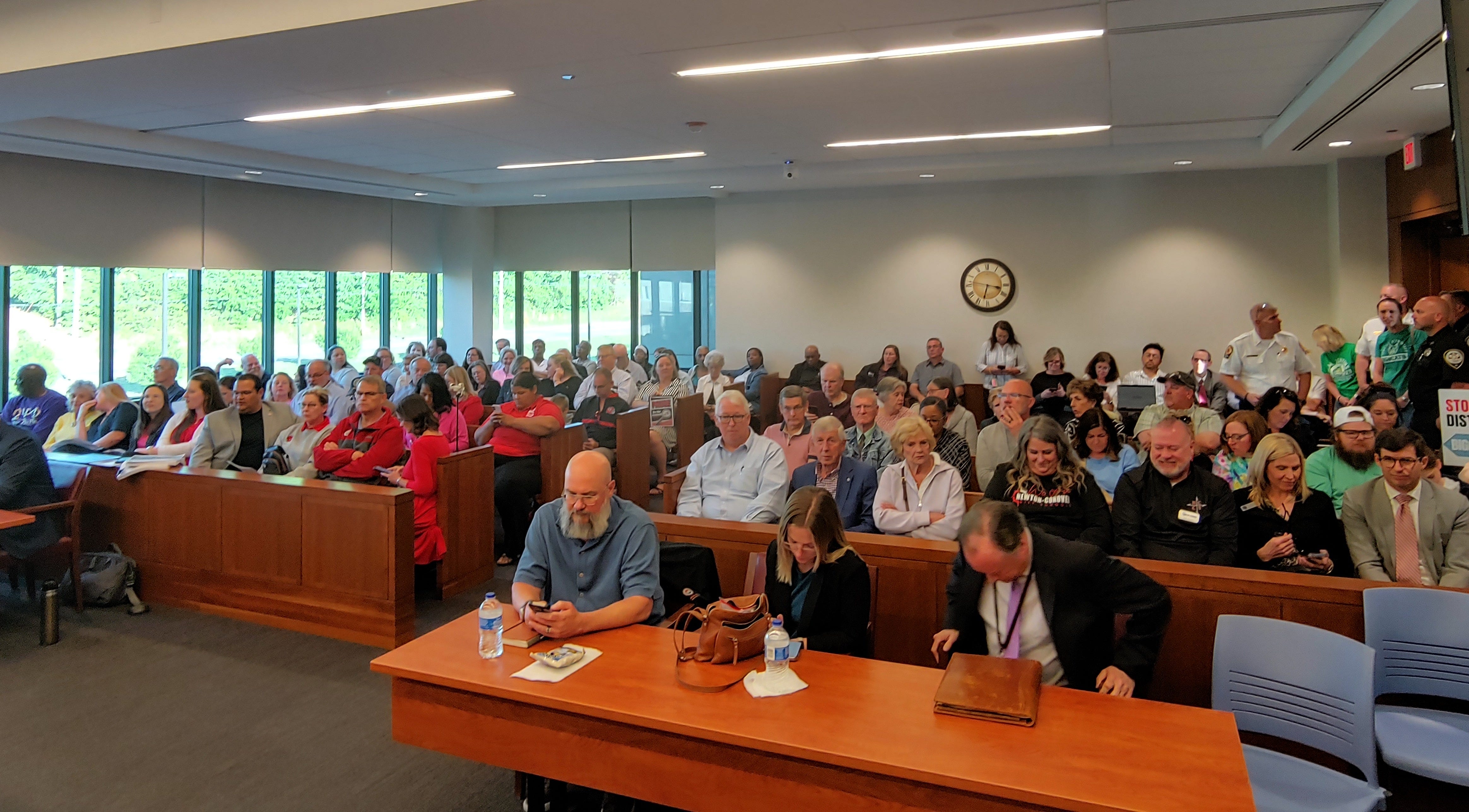
At their regularly scheduled meeting on April 20th, the Catawba County Board of Commissioners approved a measure to merge the three school systems in Catawba County.
The measure, which will merge Hickory City Schools, Newton-Conover City Schools, and Catawba County Schools into a single school system, was passed 3-2. Chairman Isenhower and Commissioners Abernethy and Setzer voted in favor, while Commissioners Allran and Beatty dissented. All commissioners were in attendance and voted on the measure.
The move was made to address budgetary shortfalls and capacity issues within the three systems, according to the commissioners. The plan will not take effect unless approved by the NC State Board of Education. If approved, the merger will take effect on July 1st, 2028, creating a combined system known as the Catawba Valley School District.
It is estimated that hundreds of citizens attended the meeting. The primary meeting room was filled, with additional citizens directed to overflow rooms where they listened to the proceedings on speakers. Representatives of seven news organizations were present, including Channel 9 and Spectrum News, both based in Charlotte.
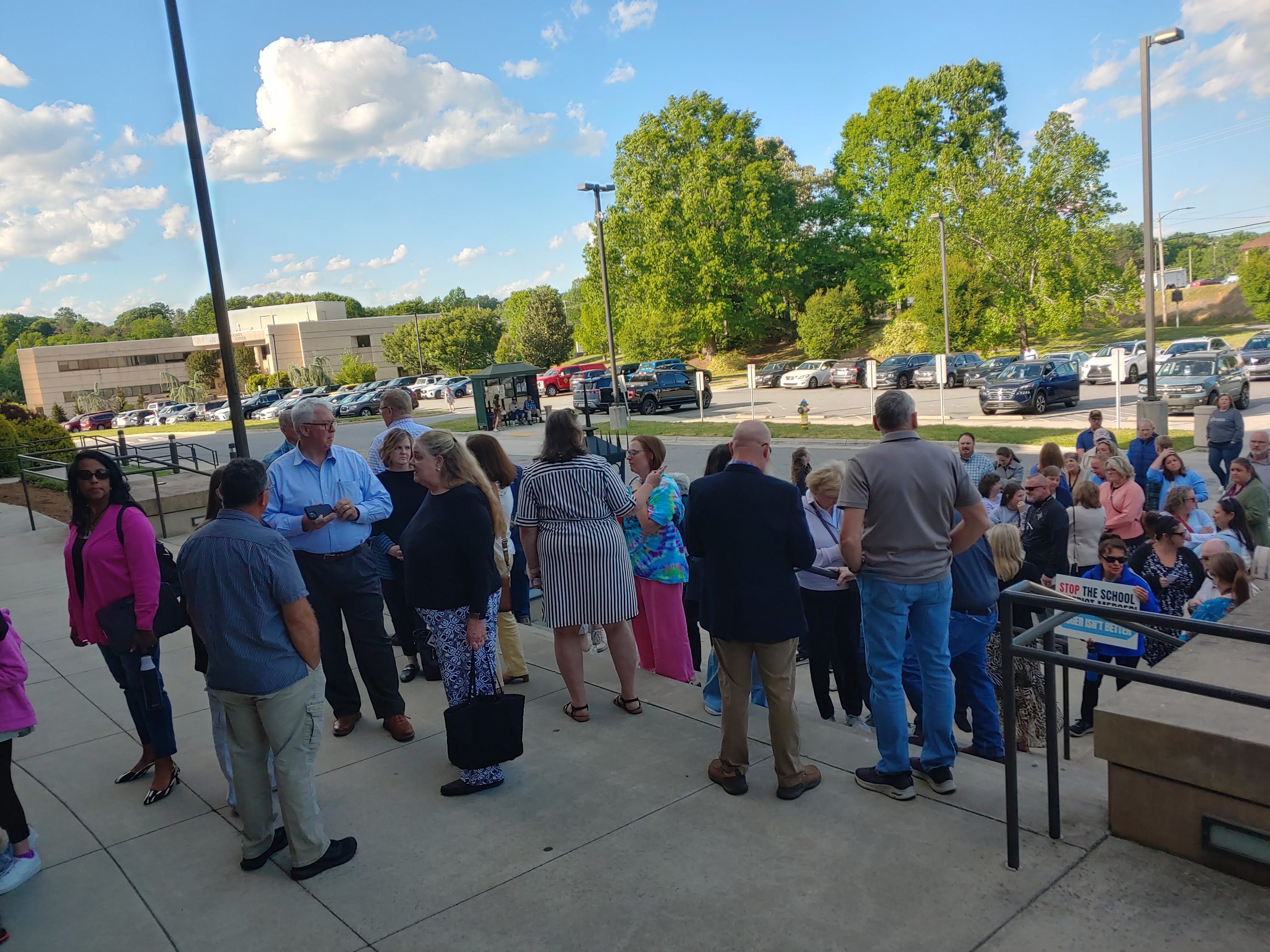
About seventy-five individuals spoke during the public hearing, seventy-four of whom were opposed to the merger and one of whom was in favor. Each individual had three uninterrupted minutes to speak in front of the commissioners and the public.
Among the individuals against the merger were superintendents, school administrators, school board members, teachers, pastors, parents, students, and former students from the two city systems. North Carolina State Senator Dean Proctor also voiced his opposition.
Nearly all of the critics said that the primary supporting document used in favor of the merger, a fifteen-page capacity study conducted by McKissick Associates (a Pennsylvania-based architectural firm), does not provide sufficient data to make an informed decision on the merger.
“Right now this entire proposal has been built on limited analysis: a short presentation by an architect, when other counties have taken the time to conduct comprehensive independent feasibility studies that look beyond buildings and enrollment,” said Robbie Gonzalez, Vice Chair of the Newton-Conover Board of Education. “[It is] a study that would cost $14 per student. So let me ask a simple question: are our students not worth $14?”
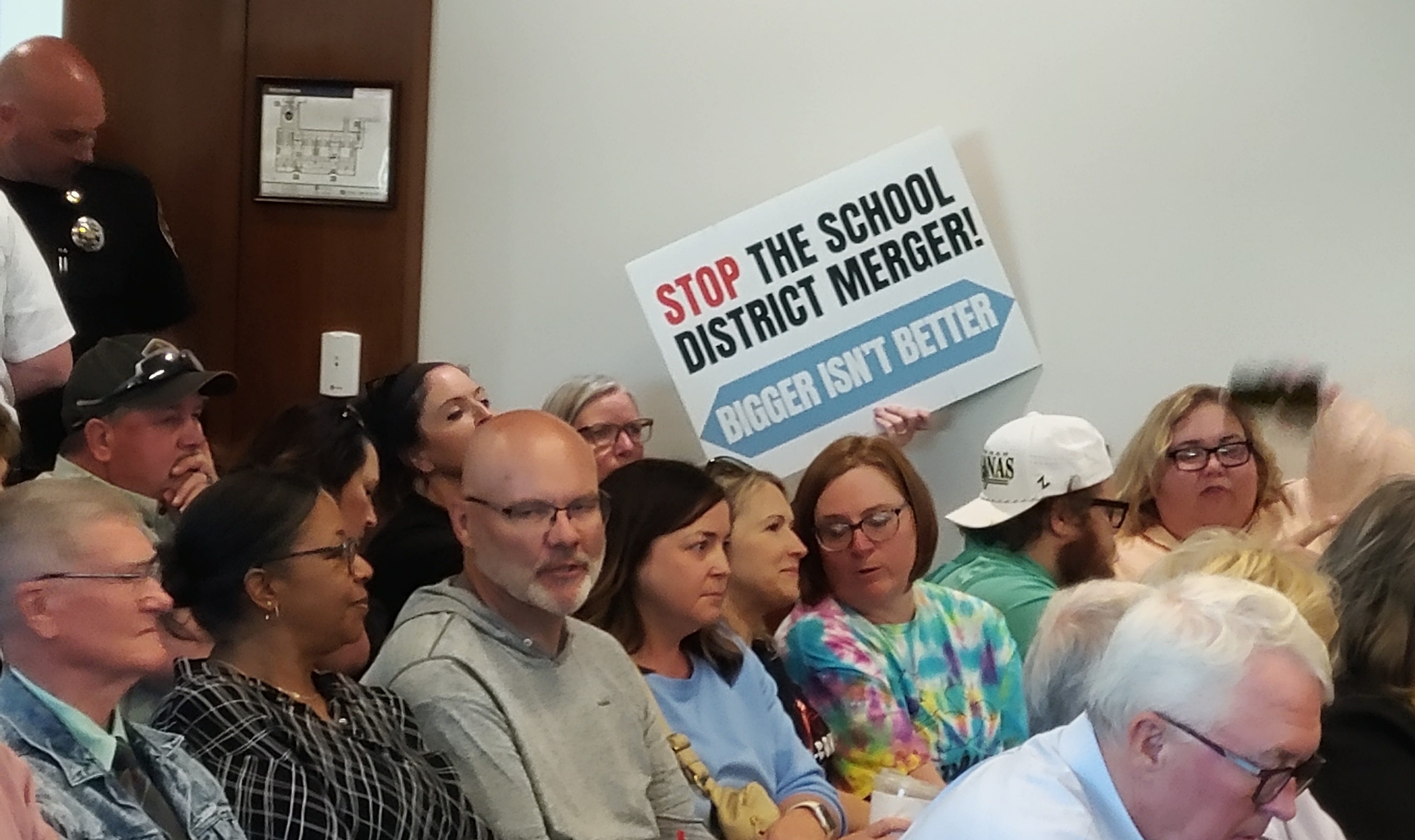
Many who opposed the merger said that they would be in favor of it if the proposed “comprehensive study” found it to be positive for the community.
Dissenters also said that school programs, such as free school lunches and disability programs, may be affected by the merger.
“We do not know the impact on our federal funding,” said Dr. Jennifer Griffin, superintendent of Hickory City Schools. “We have a community eligibility program that feeds free breakfast and lunch to all of our students. Grocery prices are high. People are struggling with gas prices. … Our children need these [meals]. They cannot learn when they are hungry, and I would ask that you pause for a study so we can ensure that we are not inadvertently taking food out of the mouths of our children.”
Opponents of the merger expressed fear that schools like Discovery High School, a competitive magnet school located in Newton, could be affected detrimentally or closed entirely as a result of the merger.
“My niece is currently in seventh grade, and has already talked about wanting to attend Discovery,” said Aliah Escamilla, a senior at Discovery and former president of the Catawba County Youth Council. “She has watched what this school has done for me, and she hopes to have that same experience one day. But with this proposed merger, Discovery’s existence is only guaranteed until 2030 … Right now, students across our county are asking for something simple: to protect a school that is already working.”
Some students focused on the emotional, mental, and social impacts of the school merger, which will result in some students being assigned to new schools.
“Do not take us from our schools and friends and teachers,” an elementary-aged girl told the board. “Our friends and teachers don’t want us to leave and we don’t want to leave. … I have been best friends with my best friend for seven years. We are planning to go to middle school and high school together, and I don’t want there to be a possibility of being separated from them.”
Opponents of the merger also expressed apprehension at what they called a lack of transparency from the commissioners. Several speakers said that the process was “undemocratic” or “socialist.”
“We have turned not into a democracy, as I would teach my students in social studies, you have become the Red Scare of Catawba County,” said a teacher of social studies at Grandview Middle School, in the Hickory City Schools system. “Because this is not a democracy, this is a dictatorship, and I will choose to dictate how I feel about this: it’s wrong, it’s immoral, and it’s deplorable.”
Upon state approval of the merger plan, the board will not have elections until 2030. The Board of Commissioners will appoint the new Catawba Valley Board of Education from each of the current school boards and three additional residents of Catawba County.
Some dissenters were concerned that the racial makeup of the new combined school board may be less diverse than the individual city boards.
“My concern also is that Hickory is the most diverse district of all. We have three African-Americans on the school board,” said Dr. Anthony Freeman, a pastor and Hickory city councilman. “Sooner or later, after the interim period where you appoint [the school board], then it goes [to a] partisan election in the county. Because of the demographics, what do you see? We’re not going to see minorities. We’re not going to see any blacks. Leadership should reflect what the people look like and who they serve.”
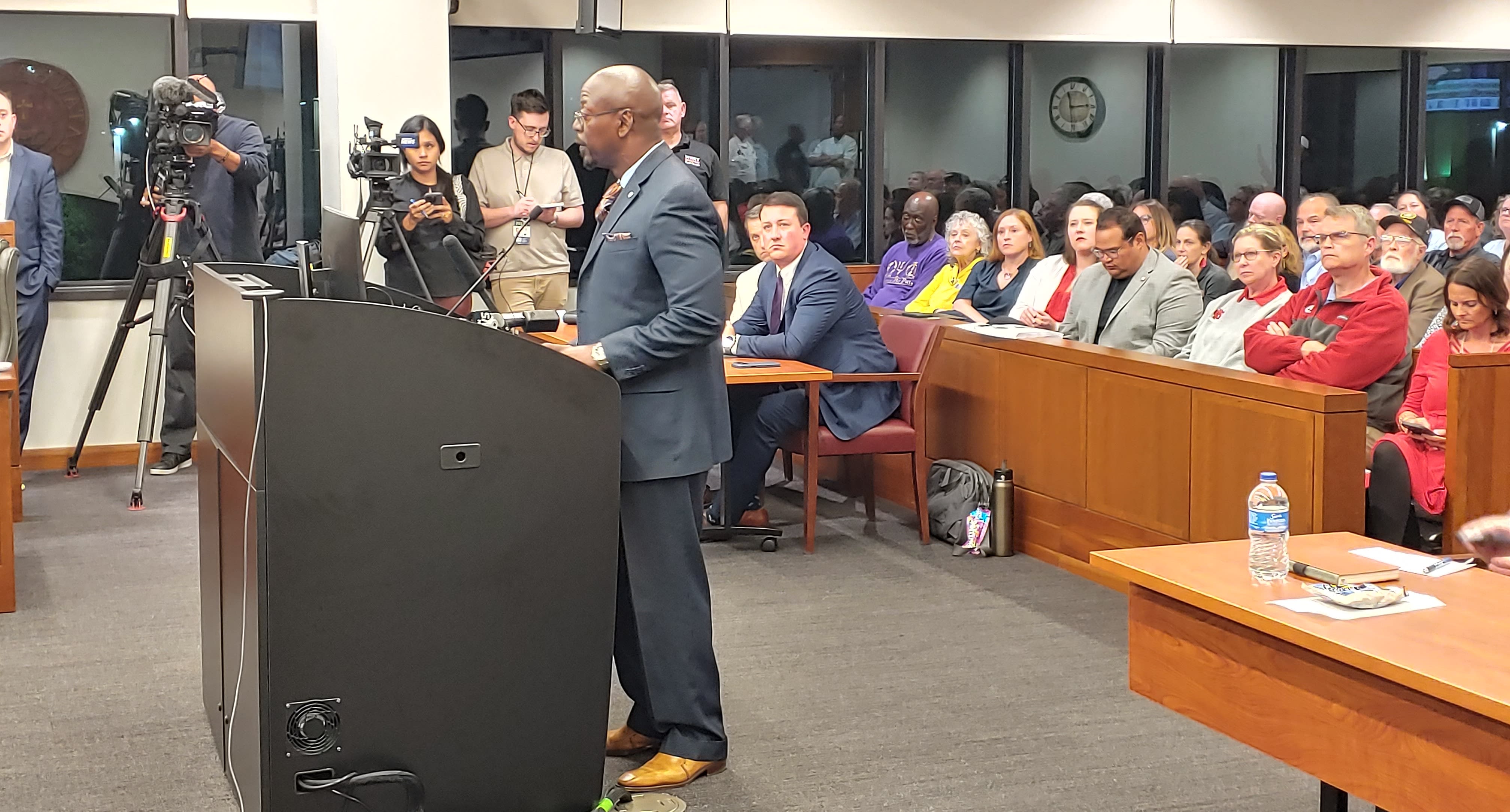
Only one individual spoke in favor of the school merger.
“You all came here tonight asking for the county commissioners to do a study. Why didn’t you pay for it?” said Larry Barger, a leader in the Catawba County Tea Party. “City of Hickory, do the rules say that you can’t pay for it? I don’t think so. If that study was that important, you would’ve brought that study forward and showed these guys why they shouldn’t do the merger.”
Barger also said that the commissioners had been more transparent than the dissenters had claimed.
“I hosted three town halls over here at the bowling alley,” Barger said. “Where was this crowd at? Why did you not come ask [the commissioners] questions? They were there, they showed up. Y’all didn’t show up. … There are citizens that didn’t show up tonight that thank you, and we vote, we appreciate it. Do the job that we elected you to do. Vote yes, and merge the schools.”
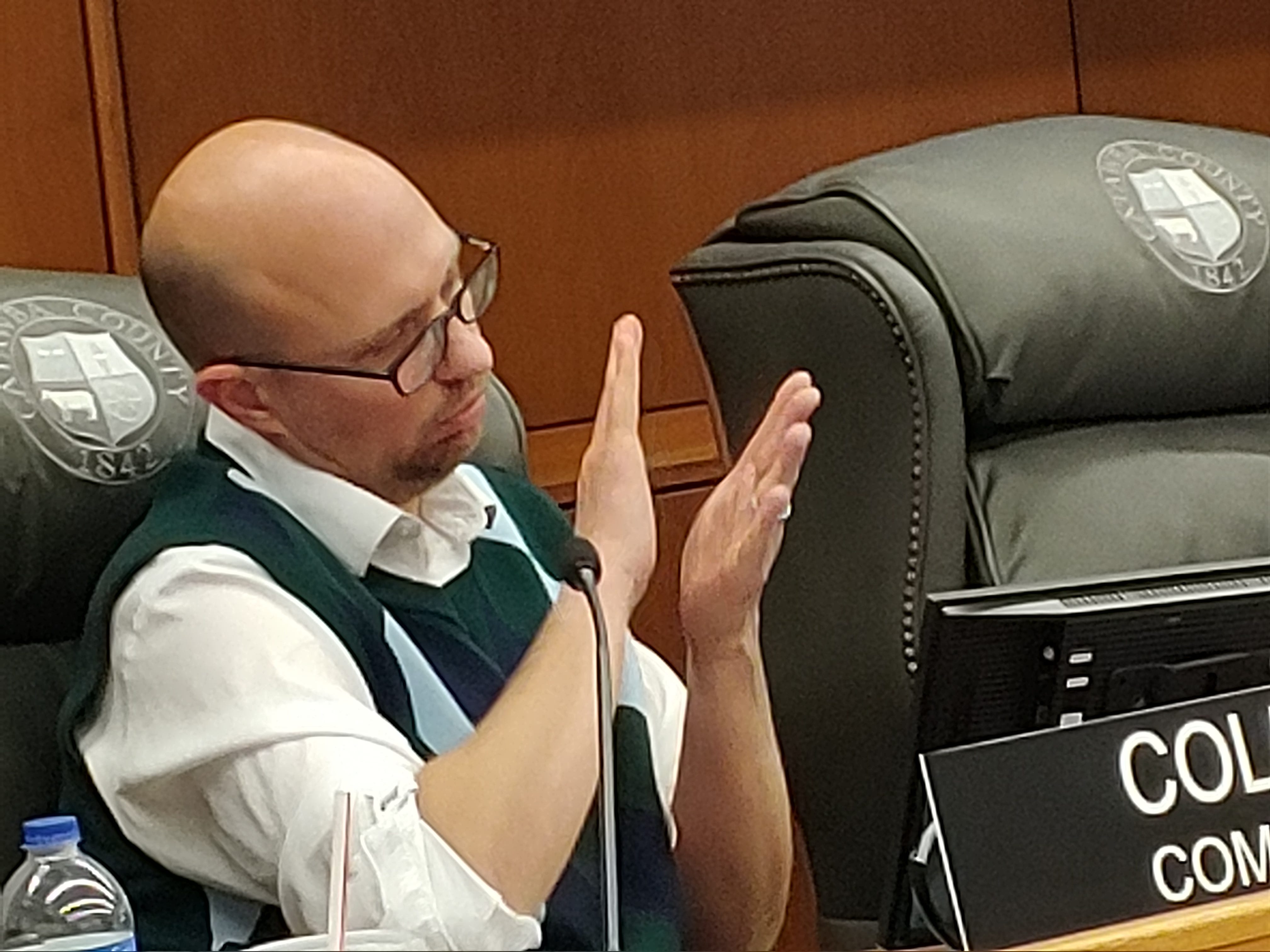
When the public comment session ended, Commissioner Allran made a motion to postpone the merger, pending a further study. The motion was met with applause and cheers from the citizen attendees.
“I think it is reasonable to commission an independent third-party comprehensive study,” Allran said. “I don’t see how it could possibly hurt, and I think it would help for the reasons that have been expressed, and have been expressed very well.”
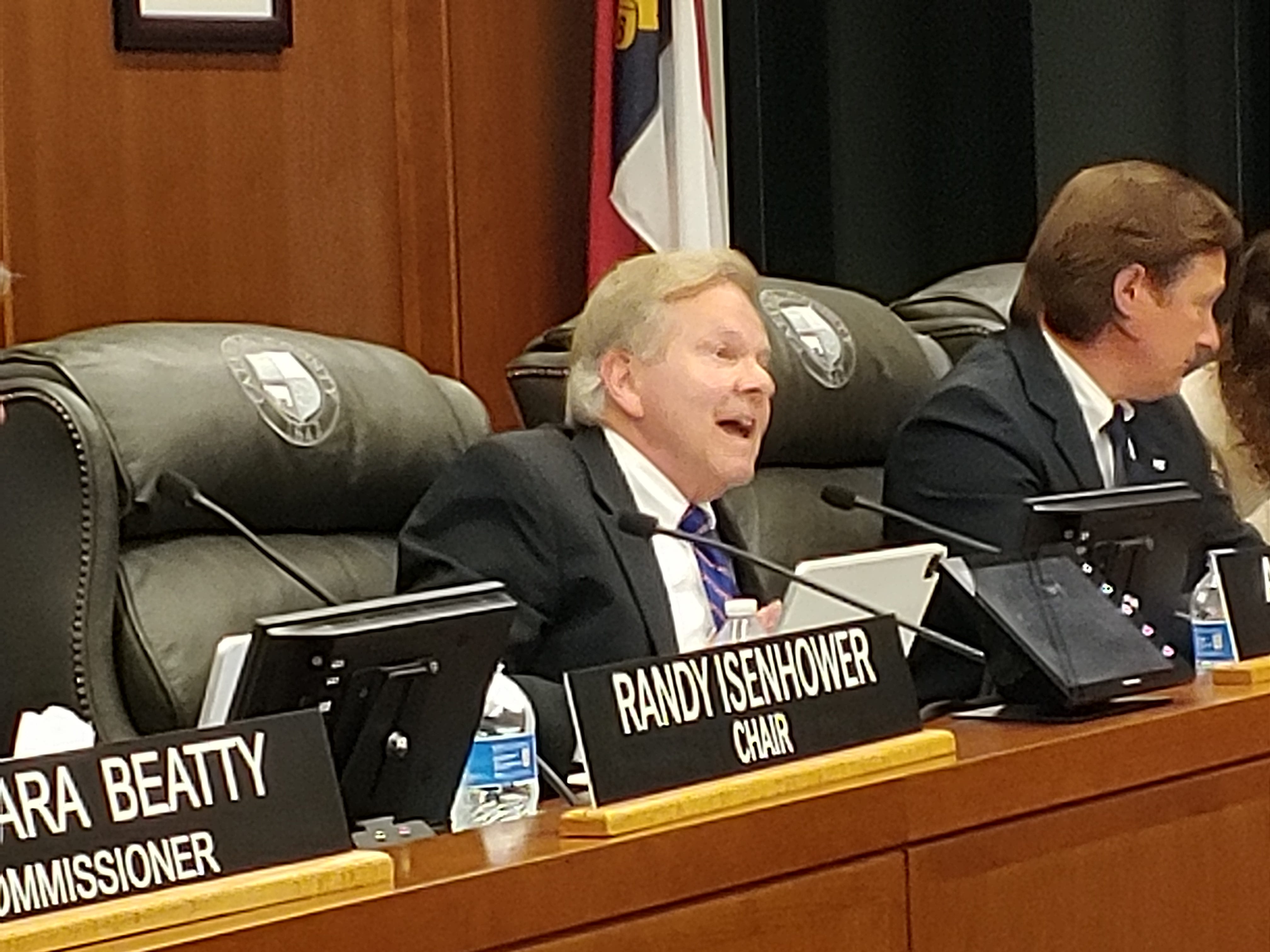
The commissioners discussed the issue, with Chair Isenhower leading discussion. He described his reading of supplemental materials, including similar studies, which he said only gave “common sense” information.
“My point is, when I read it the second time I thought, is there something here that I can glean, that we can commission a study to tell us about?” Isenhower said. “What this study really did is say, ‘This is what you need to look at.’ I appreciate people wanting a study, but … I think a study - and it’s not just the money in it - I just don’t think it’s going to resolve the issue.”
The motion to commission an independent study failed, with only commissioners Allran and Beatty voting in favor.
After the vote, Isenhower spoke on his experience with the school system, stating that the merger would not have the negative effects that the citizens had suggested.
“In addition to being a contractor, I served twelve years on the school board,” Isenhower said. “I was on that board when it started Discovery High School. [We] got a Bill Gates grant and we started a high school. It was a reach and we didn’t know how that was going to go. I appreciate everyone’s passion, consideration, and concerns, [but] if we have good programs they’re going to stay.”
The final vote on the merger, which passed 3-2, drew mixed reactions from the crowd.
The plan will be submitted to the State Board of Education and will be reviewed at their next scheduled meeting in early June. If the state board approves the plan, the Catawba Valley Board of Education would be appointed the following Tuesday.
Opponents of the merger have turned their efforts to the State Board of Elections, encouraging citizens to contact the board and express their opposition.
“While this outcome is not what we had hoped for, we want to be clear: our work is not finished,” Hickory City Schools Superintendent Jennifer Griffin said in a statement. “As this process moves to the next phase, we will continue to advocate on behalf of our students, staff, and community at the state level. In order to be final, the plan will need to be approved by the State Board of Education. We encourage our community to remain engaged.”
To read the full text of the adopted merger plan, visit Catawba County’s website.
A full recording of the Board of Commissioners meeting can be found on the WHKY Facebook page.
GALLERY


So, is this good or bad? Seems like lots of people were opposed, but how does this affect the taxpayers—the ones who pay for everything? I understand why entrenched educational employees want the status quo. And I also think giant education systems (CMS) are awful, but what is good and what is bad?